

Can a Big Ball Cleaner clean balls that have been in a radiation - prone environment?
As a supplier of Big Ball Cleaners, I often get asked a wide range of questions about the capabilities of our products. One rather unique and thought - provoking question that has come up recently is whether a Big Ball Cleaner can clean balls that have been in a radiation - prone environment. In this blog, we'll delve into this topic and explore the scientific and practical aspects of it.
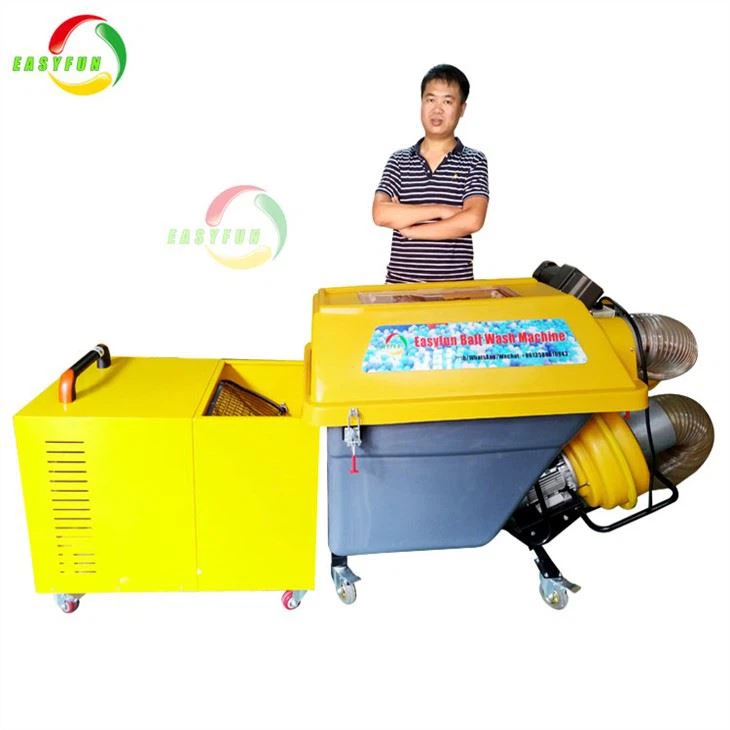
First, let's understand what a Big Ball Cleaner is. Our Big Ball Cleaners are high - quality machines designed to clean large quantities of balls efficiently. We offer a variety of models, such as the Automatic Pit Balls Pool Washer Machine, the Ocean Ball Plastic Pool Cleaning Machine Ball Pool, and the Indoor Playground Children Ball Pit Ball Cleaner. These machines are typically used in settings like ball pits in indoor playgrounds, plastic pools filled with balls, and other similar recreational areas. They use advanced cleaning technologies to remove dirt, dust, and other common contaminants from the balls.
Now, let's turn our attention to the issue of radiation. Radiation can come from various sources, including nuclear power plants, radioactive waste sites, and even some medical facilities. When balls are exposed to a radiation - prone environment, they may become contaminated with radioactive particles. The key question here is whether our Big Ball Cleaners can effectively remove these radioactive contaminants.
To answer this question, we need to understand the nature of radioactive contamination. Radioactive particles can attach to the surface of the balls in different ways. Some may be loosely bound, while others may be more firmly adhered due to chemical or physical interactions. Our Big Ball Cleaners are equipped with powerful brushes, water jets, and cleaning agents that are designed to dislodge and remove dirt and debris from the ball's surface.
For loosely bound radioactive particles, there is a good chance that our cleaners can remove them. The mechanical action of the brushes and the force of the water jets can dislodge these particles, and the cleaning agents can help in suspending them in the water so that they can be washed away. However, for more firmly bound radioactive particles, the situation is more complex.
Radioactive particles that have chemically reacted with the ball's surface or have become deeply embedded may be more difficult to remove. In such cases, our Big Ball Cleaners may not be able to completely eliminate the radioactive contamination. The cleaning process mainly focuses on the surface of the balls, and if the radioactive material has penetrated deeper into the ball's structure, additional treatment methods may be required.
Another factor to consider is the type of radiation. There are different types of radiation, such as alpha, beta, and gamma radiation. Alpha particles are relatively large and can be stopped by a thin layer of material, including the outer surface of the balls. Beta particles are smaller and more penetrating, while gamma rays are highly energetic and can pass through most materials. Our Big Ball Cleaners are primarily designed to deal with surface contaminants, so they are more likely to be effective against alpha - emitting radioactive particles that are on the surface of the balls.
In a practical sense, if balls have been in a radiation - prone environment, it is crucial to conduct a thorough radiation assessment before attempting to clean them. This assessment can help determine the level and type of radioactive contamination. If the contamination is relatively low and consists mainly of loosely bound particles, our Big Ball Cleaners can be a part of the cleaning process. However, if the contamination is high or the particles are deeply embedded, it may be necessary to consult with radiation experts and use specialized decontamination techniques.

It's also important to note that safety is of utmost importance when dealing with radioactive materials. Our Big Ball Cleaners are designed with safety features to protect the operators during normal cleaning operations. But when cleaning balls with radioactive contamination, additional safety precautions need to be taken. This may include wearing protective clothing, using proper ventilation systems, and following strict decontamination procedures for the cleaning equipment itself after the cleaning process is completed.
In conclusion, while our Big Ball Cleaners can potentially remove some radioactive contaminants from balls that have been in a radiation - prone environment, their effectiveness depends on several factors such as the type and degree of contamination, the nature of the radioactive particles, and how firmly they are attached to the balls. For relatively mild surface contamination, our machines can play a role in the cleaning process. However, in more severe cases, additional expertise and specialized techniques are required.
If you are facing a situation where you need to clean balls from a radiation - prone environment or have any other ball - cleaning needs, we encourage you to get in touch with us for a detailed discussion. Our team of experts can assess your specific requirements and provide you with the most suitable solutions. Whether it's choosing the right model of our Big Ball Cleaner or discussing alternative decontamination methods, we are here to help you make an informed decision. Contact us today to start the procurement and negotiation process, and let us work together to ensure the cleanliness and safety of your balls.
References
- "Principles of Radiation Protection" - A standard textbook on radiation safety and protection concepts.
- "Industrial Cleaning Technologies" - A resource that covers various cleaning methods and their effectiveness against different types of contaminants.