

In the dynamic landscape of children's entertainment and educational spaces, the concept of a "Naughty Fort" has emerged as a captivating and popular choice. As a dedicated supplier of Naughty Fort equipment, I've had the privilege of being closely involved in the design, development, and distribution of these exciting play areas. One question that often arises in discussions with potential clients, partners, and enthusiasts is whether there is a research center at Naughty Fort. In this blog post, I'll explore this topic in detail, drawing on my experiences and industry knowledge.
The Significance of Research in the Naughty Fort Industry
Before delving into the question of whether there's a research center at Naughty Fort, it's essential to understand the importance of research in this industry. The Naughty Fort, which typically includes elements like Children indoor playground with big ball pool, is not just a simple play area; it's a complex environment designed to stimulate children's physical, cognitive, and social development.
Research plays a crucial role in several aspects of the Naughty Fort industry. Firstly, it helps in understanding the changing needs and preferences of children. As children grow up in different eras, their interests and play patterns evolve. For example, modern children are more exposed to digital media, and this has an impact on what they look for in a physical play environment. By conducting research, we can ensure that our Naughty Fort designs incorporate elements that are both engaging and relevant to today's children.
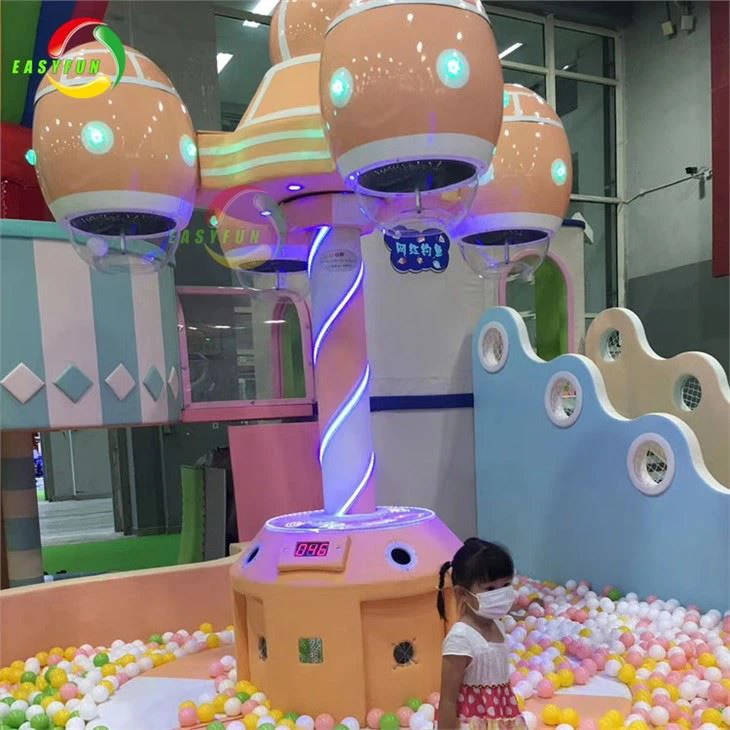
Secondly, research is vital for safety. Children's safety is our top priority, and we need to ensure that all the equipment in a Naughty Fort meets the highest safety standards. Through research, we can identify potential hazards, test new materials, and develop innovative safety features. For instance, the Hot Sell Ball Collection Sprinkling Ball Game Machine For Soft Playground In Amusement Park needs to be designed in a way that minimizes the risk of injury while still providing an exciting play experience.
Finally, research also contributes to the overall quality and effectiveness of the Naughty Fort as an educational tool. By studying child development theories and educational practices, we can design play areas that promote learning in a fun and engaging way. For example, certain play structures can be designed to enhance problem-solving skills, creativity, and teamwork among children.
The Reality of a Research Center at Naughty Fort
As a supplier, I can confirm that while there may not be a dedicated, standalone "research center" in the traditional sense at every Naughty Fort location, the industry as a whole is highly research - driven. Many of the leading suppliers, including myself, invest heavily in research and development activities.
We collaborate with experts in various fields such as child psychology, engineering, and materials science. These partnerships allow us to access the latest research findings and incorporate them into our product designs. For example, we work with child psychologists to understand how different colors, shapes, and textures can affect a child's mood and behavior. Based on this knowledge, we can choose the most appropriate materials and designs for our Naughty Fort equipment.
In addition to external collaborations, we also conduct our own in - house research. Our teams regularly test new products and concepts to ensure their functionality, safety, and appeal. For the Children Indoor Playground Naughty Fort Sprinkle Balls Game Machine, we conduct multiple rounds of testing with children of different ages to gather feedback on its playability and any potential areas for improvement.
Moreover, we stay updated with the latest industry trends and research through participation in international conferences, workshops, and trade shows. These events provide a platform for us to learn from other industry players, share our own research findings, and discover new technologies and materials that can be applied to our Naughty Fort products.
The Impact of Research on Naughty Fort Products
The research efforts in the Naughty Fort industry have had a significant impact on the products we offer. One of the most noticeable changes is in the design of the play areas. Thanks to research on child development, our Naughty Forts now feature a more diverse range of play elements that cater to different age groups and skill levels. For younger children, there are gentle slopes, soft climbing structures, and simple ball - playing areas. Older children, on the other hand, can enjoy more challenging obstacles, interactive games, and multi - level play structures.
In terms of safety, research has led to the development of new materials and construction techniques. We now use high - quality, non - toxic, and durable materials that can withstand the wear and tear of constant use by children. Additionally, the design of the equipment has been optimized to reduce the risk of entrapment, falls, and other common injuries. For example, the edges of play structures are rounded, and there are safety barriers in place to prevent children from accessing dangerous areas.
The educational aspect of Naughty Forts has also been enhanced through research. Many of our play areas now incorporate elements that promote STEM (Science, Technology, Engineering, and Mathematics) learning. For example, some ball - based games can teach children about physics concepts such as gravity and motion. Interactive panels and touch - sensitive devices can introduce children to basic programming and coding concepts.
The Future of Research in the Naughty Fort Industry
Looking ahead, the role of research in the Naughty Fort industry is only going to become more important. As technology continues to advance, there will be new opportunities to integrate digital elements into physical play areas. For example, we may see the development of augmented reality (AR) and virtual reality (VR) experiences within Naughty Forts, which can provide an even more immersive and educational play experience for children.

Research will also be crucial in addressing emerging challenges, such as the impact of screen time on children's physical and mental health. By understanding how to balance digital and physical play, we can design Naughty Forts that help children develop healthy habits and a well - rounded set of skills.
In addition, as the global population grows and the demand for high - quality children's play areas increases, research will be needed to ensure that our products are sustainable and environmentally friendly. This may involve the use of recycled materials, energy - efficient lighting, and water - saving features in Naughty Forts.
Conclusion and Call to Action
In conclusion, while there may not be a single, centralized research center at Naughty Fort, the industry is committed to continuous research and development. As a supplier, I am proud to be part of this innovative and forward - thinking community. Our research efforts ensure that we can provide children with safe, engaging, and educational play experiences.
If you are interested in learning more about our Naughty Fort products or are considering a purchase for your business or organization, I encourage you to reach out to us. We are always happy to discuss your specific needs, share our research findings, and provide you with the best possible solutions. Whether you are looking for a small indoor play area or a large - scale amusement park installation, we have the expertise and products to meet your requirements. Let's work together to create a world where children can learn and grow through the power of play.
References
- Child Development Theories: An Overview. (Author, Publication Year)
- Safety Standards for Children's Play Equipment. (Organization, Publication Year)
- The Impact of Digital Media on Children's Play. (Research Institution, Publication Year)